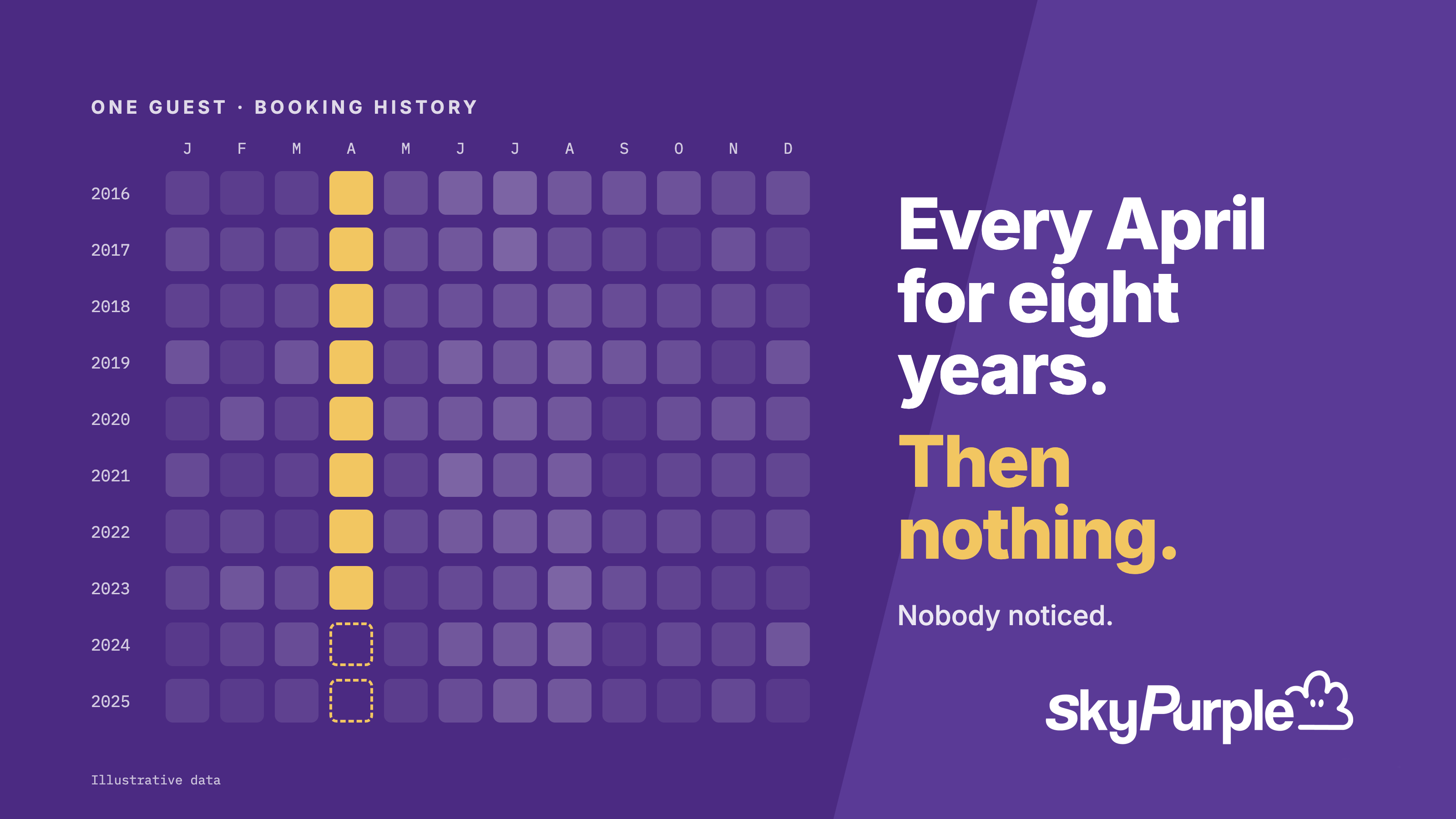
A few weeks ago I sat down with someone who runs a small group of hotels. Somewhere in the conversation they mentioned, almost in passing, that they had over ten years of guest data. Every booking, every stay, how far people travelled, when they came, who came back and who didn't. Ten years of it! And as far as anyone could tell, nobody had ever really asked it a question.
That isn't a criticism; it's completely normal. Most businesses I talk to are in the same position. The data gets collected because the booking system, the till or the CRM needs it to do its job, and then it just sits there. Everyone's busy running the business, and the data is a by-product of that ... not something anyone thinks of as an asset.
So what could it actually tell them? Quite a lot, as it happens. Which guests come back every year around the same time, and which ones used to and have quietly stopped. Whether people who book a weekend in spring are likely to come back for a midweek break in the autumn. Which of their hotels pick up guests from the others, and which ones people visit once and never again. None of this needs anything clever. Most of it is pattern-spotting that a person could do by hand, if they had a spare six months and a very large spreadsheet! 😁
That's where AI earns its keep. Not by being magic, but by going through ten years of bookings in an afternoon and saying "these 400 people look like they're about to drift away, and here's what they have in common". Then a person decides what to do about it. A well-timed email, a returning-guest rate, a phone call for the regulars. The AI finds the pattern; the business still makes the call.
But, before any of that, there's the bit nobody enjoys. Ten years of data is never ten years of clean data. The same guest shows up three times with three different email addresses. Someone changed booking systems in 2019 and half the history came across without postcodes. A chunk of the bookings came through the big online travel sites (you know which ones!), and for those you often don't have much more than a name and a masked email address; the site owns the relationship, not you. Working out what you've actually got, and how much of it you can trust, is usually the first real piece of work. It's not glamorous, but if you skip it, the AI will happily give you very confident answers built on rubbish.
Then there's GDPR, which is usually where these conversations go a bit quiet. It shouldn't stop you, but it does need thinking about properly at the start rather than at the end. A few of the questions that came up in the hotel conversation:
- Did guests know their booking history might be used like this? Analysing your own customers to serve them better is generally fine, but your privacy notice should say you do it.
- Some of what looks like harmless demographic data isn't. Accessibility requirements, dietary notes that hint at religion or health; those are special category data and need handling with a lot more care, or leaving out altogether.
- Ten years is a long time. Do you have a reason to still be holding the oldest records? If not, the honest answer might be to delete some of it before you start, not analyse it.
- Emailing people off the back of it has its own rules. Existing guests who were given the chance to opt out are normally fine to contact about similar things; people who booked once through a third-party site might not be.
I'm not a lawyer, that much is obvious, but I'd always want whoever looks after data protection in the business involved early. In my experience, most of this is very manageable as long as it's designed in from day one.
So where do you start? Small. Pick one question that would actually change what you do on Monday morning. Something like "which guests who've stayed with us at least twice haven't been back in eighteen months?" Answer that one properly, act on it, and see whether anything happens. If it does, you've got a reason to go further and a much better idea of what your data is really like. If it doesn't, you've found that out for a few weeks' work rather than a big project.
The thing I keep coming back to from that conversation is that they didn't need to buy any new data, or a new system, to get started. It was already there; it just needed someone to go and ask it something.
If you've got a few years of customer data sitting in a system somewhere and you're wondering whether it's worth anything, I'm happy to have a chat about it. No charge, and I'll tell you honestly if I think it isn't.
Roy Long, skyPurple Cloud